
Built above the drainage path
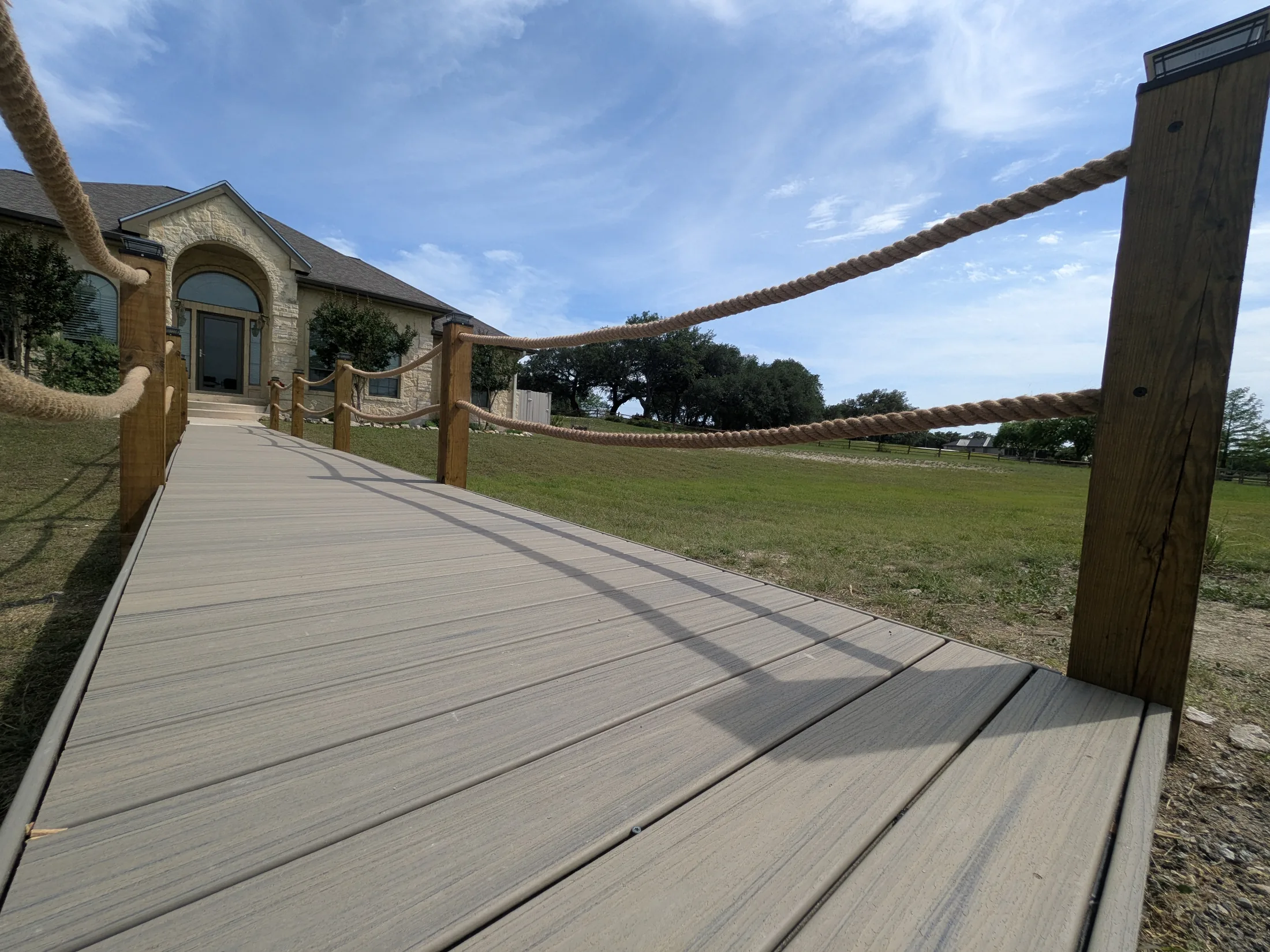
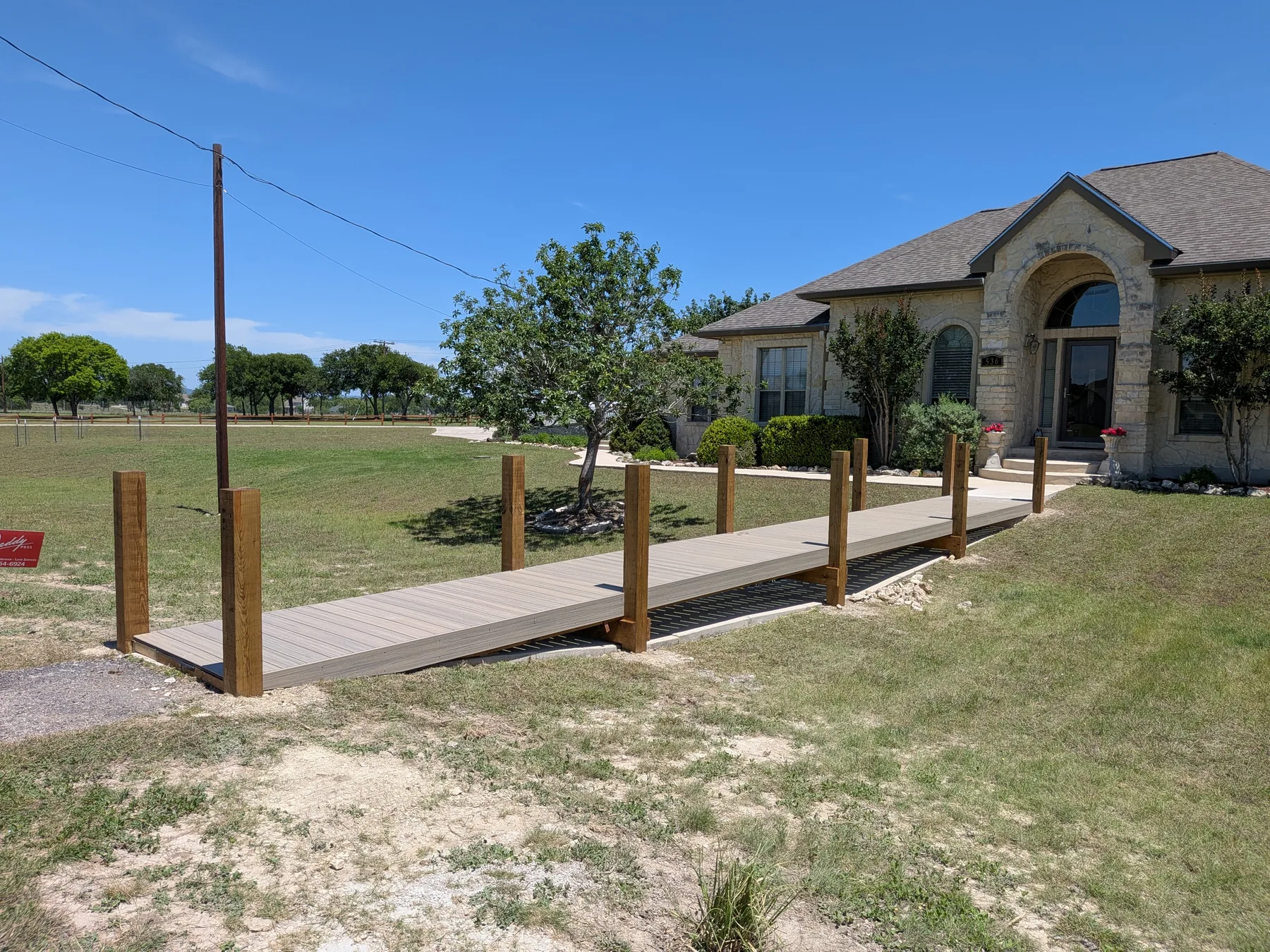
The boardwalk gives the homeowners a dry, consistent path to the front entry while letting stormwater keep moving through the low area.
Project Spotlight
A custom boardwalk bridge built over a natural drainage path so the homeowners could get from their parking area to the front door without fighting runoff after heavy rain.
The situation
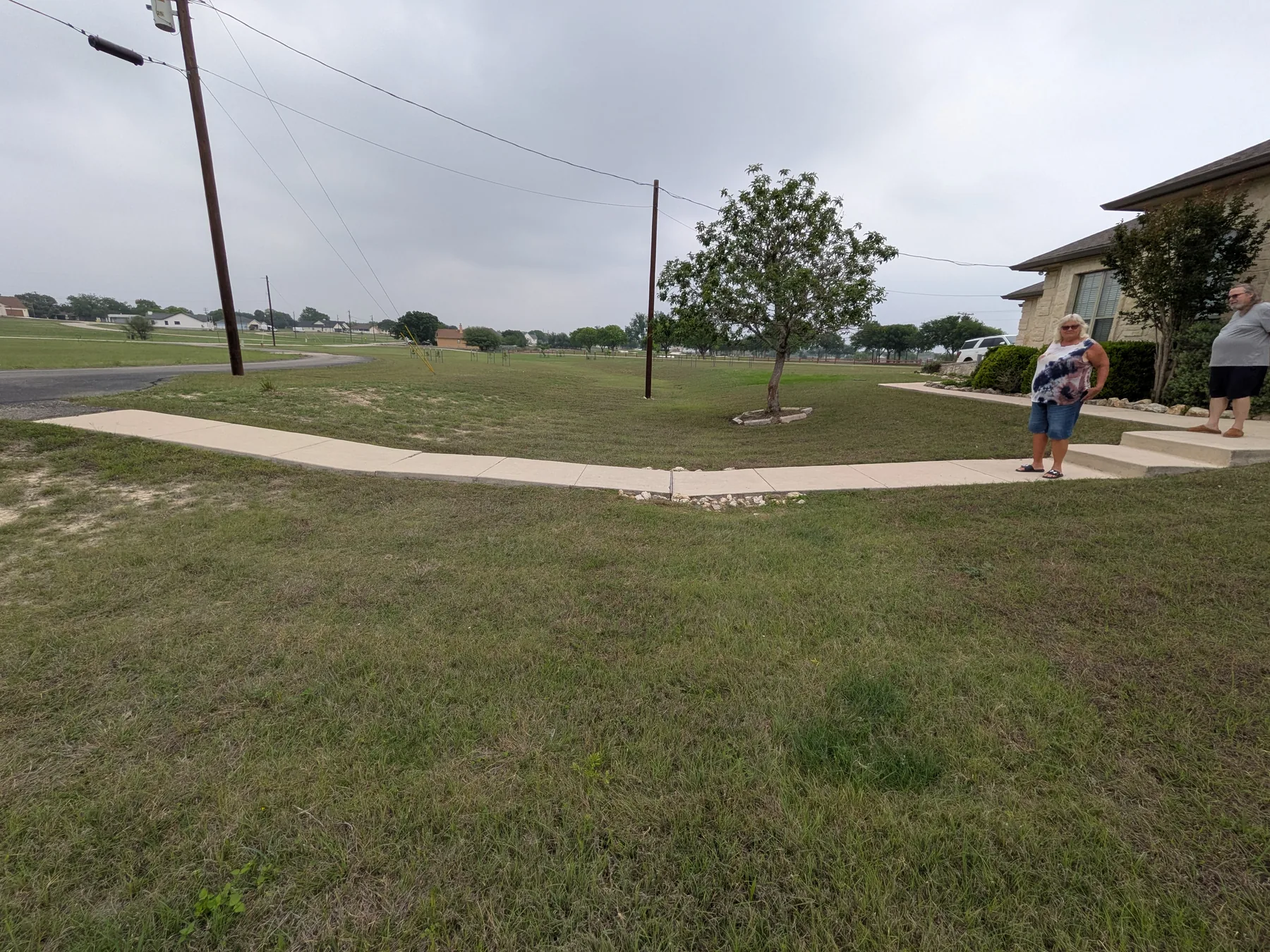
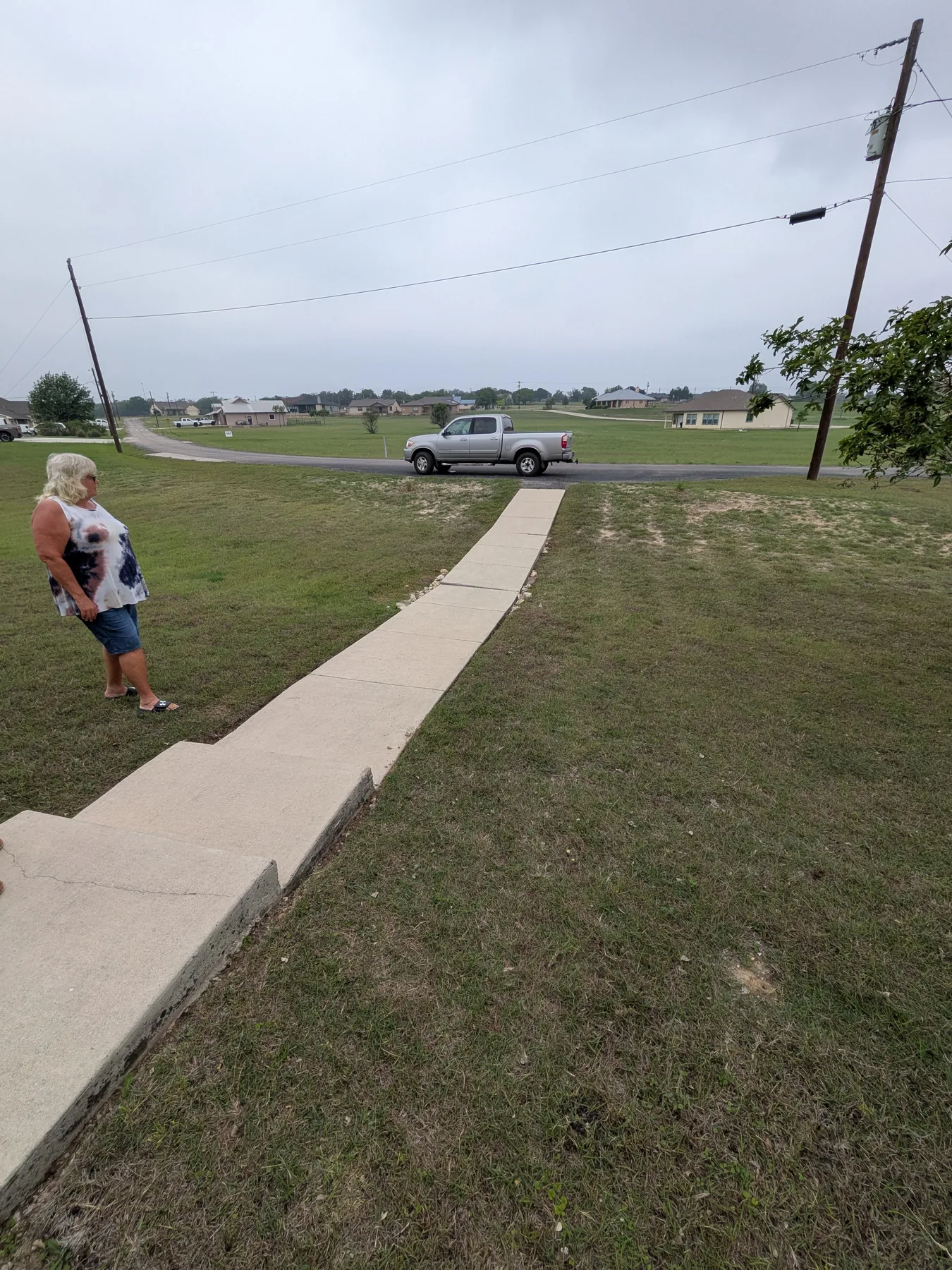
In Flying L in Bandera, this homeowner had a natural ravine between the parking area and the front entry. When hard rain came through, water flowed through the low spot and the existing sidewalk became wet, covered in mud, and impassable until the water receded. Reddy Pros built a raised boardwalk bridge that solved the access problem while matching the home’s nautical style.
What changed
The boardwalk gives the homeowners a dry, consistent path to the front entry while letting stormwater keep moving through the low area.
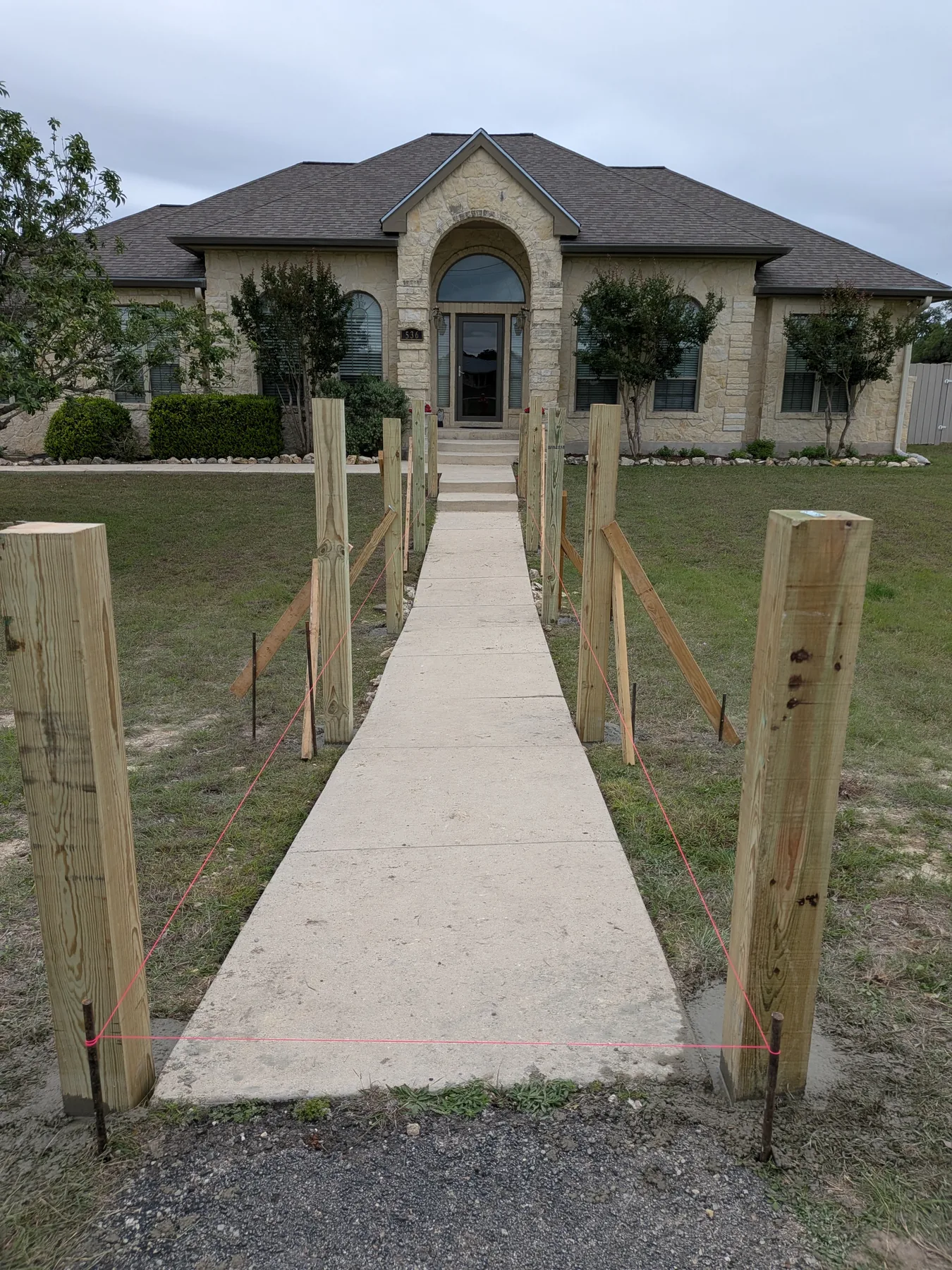
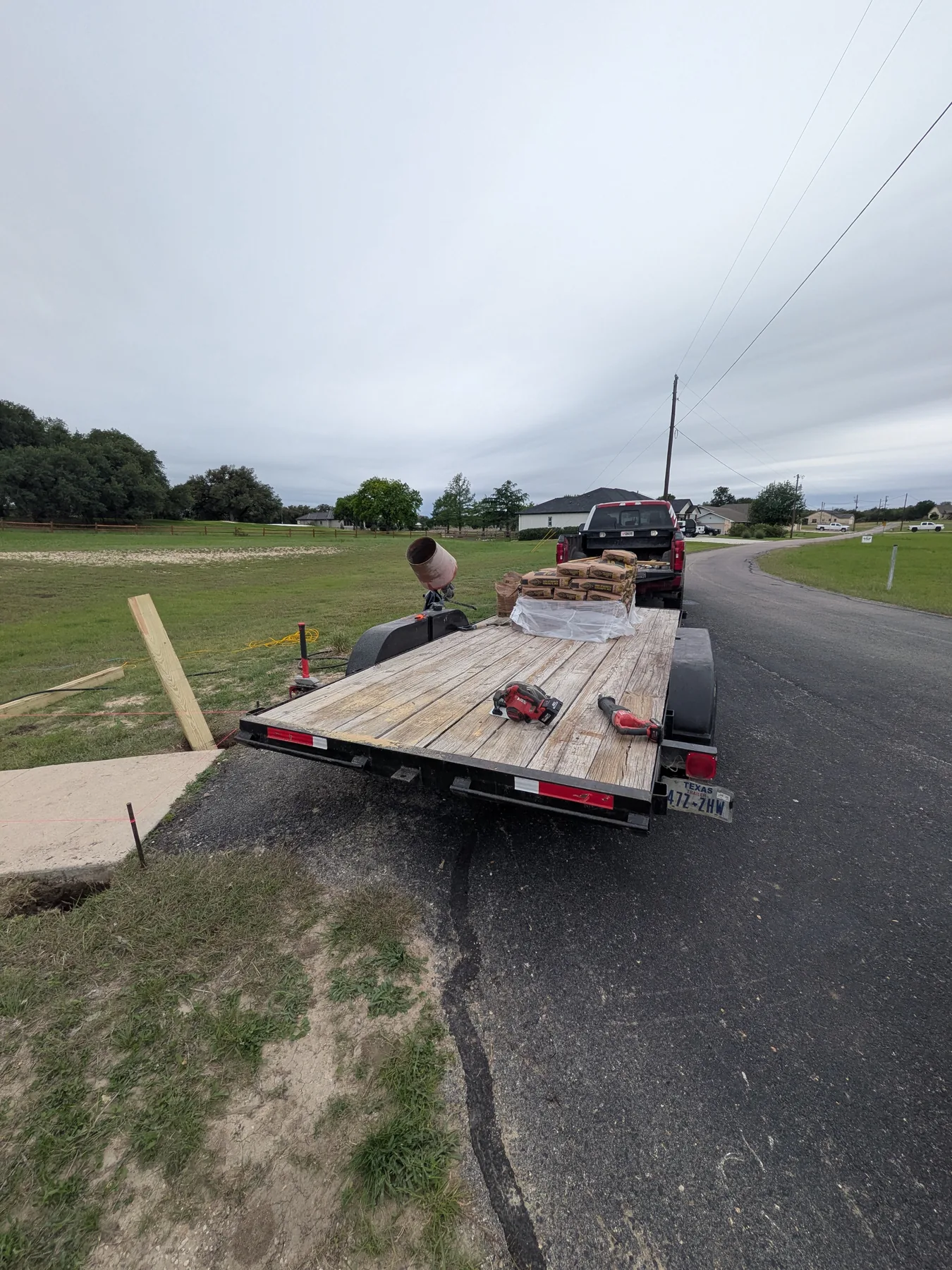
The 6×6 treated posts were set roughly 3 feet deep directly in concrete to better handle the lateral force of moving water.
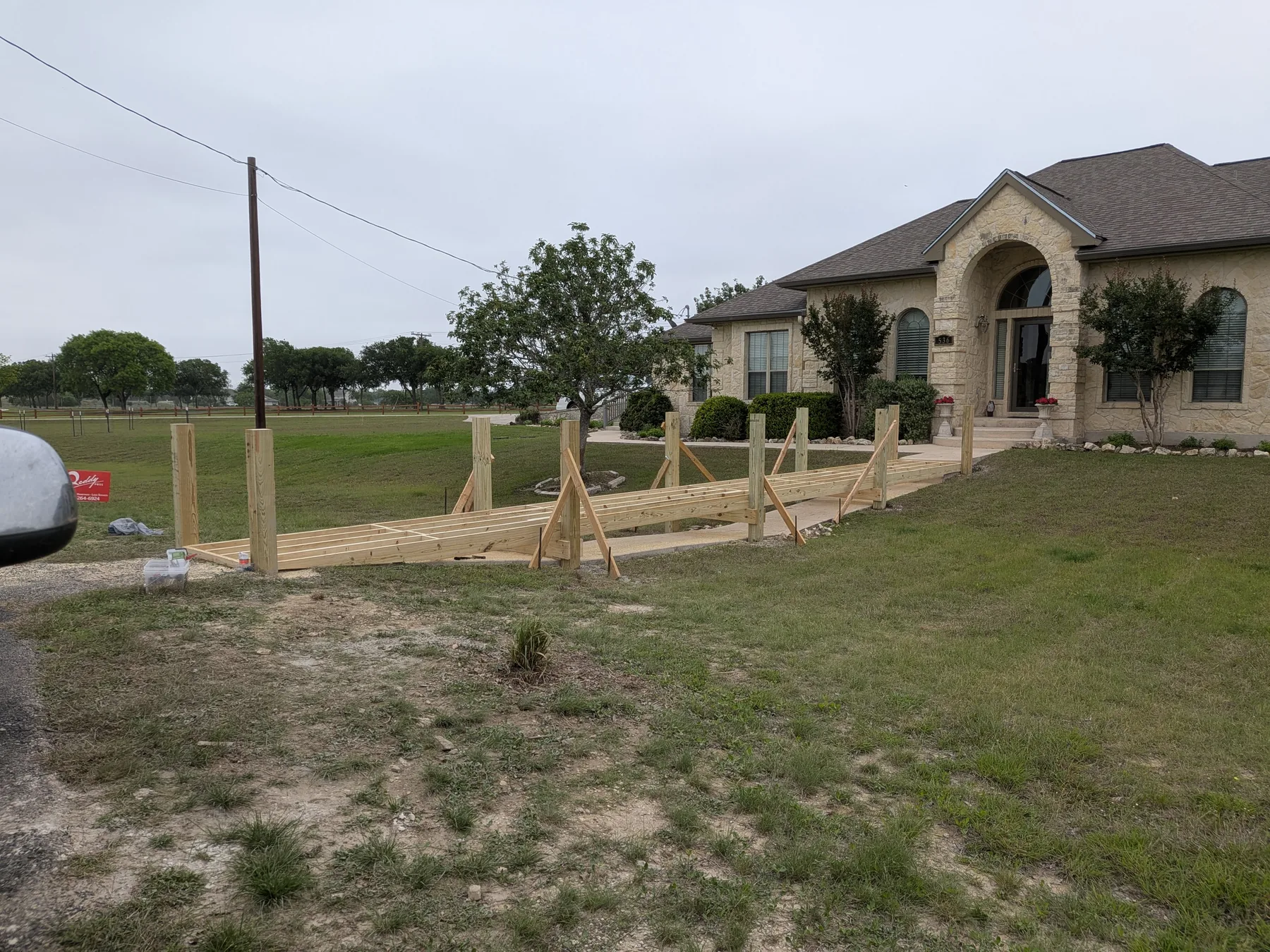
Pressure-treated framing, 12-inch-on-center joists, and butyl joist tape prepared the structure for a durable Trex walking surface.
Trex Honey Grove decking, matching fascia, extended posts, and double runs of 2-inch natural jute rope gave the bridge its boardwalk look.
The problem
Some projects are about making a space prettier. Others solve a daily problem that gets old really fast.
For this homeowner, every hard rain sent water through a natural ravine between the parking area and the front door. The existing sidewalk crossed the low spot, which meant getting from the house to the vehicle could become wet, muddy, and difficult.
Design direction
While meeting with the homeowners, we noticed they had a lot of nautical-themed decor inside the home. That small detail changed the direction of the project.
Instead of building a plain pedestrian bridge, we suggested a raised boardwalk with the feel of a pier or dock. They loved the idea because it solved the access problem and matched their style and personality.

Site strategy
The final design was approximately 42 feet long and 5 feet wide, running from the road area to the sidewalk near the top of the existing concrete step.
Water was already naturally moving through this area, so the better answer was not to block it or redirect it in a way that might create new problems. The boardwalk gives people a clean path above the ravine while still letting the drainage area do its job.
Existing concrete
One important decision was to leave the existing sidewalk in place below the new boardwalk. At first glance, tearing it out might seem cleaner, but it was actually helping.
The concrete provides erosion control underneath the bridge, and it helps keep grass and weeds from growing in an area that would be difficult to mow or weedeat later.
Foundation adjustment
The original plan included sonotube footings with post brackets. Once we looked more closely at the site and the way water would move through the ravine, we adjusted the approach.
Instead, we set the 6×6 treated posts roughly 3 feet deep directly into concrete. That gave the structure a more dock-like build and helped it better resist the lateral force of moving water during heavy rain.
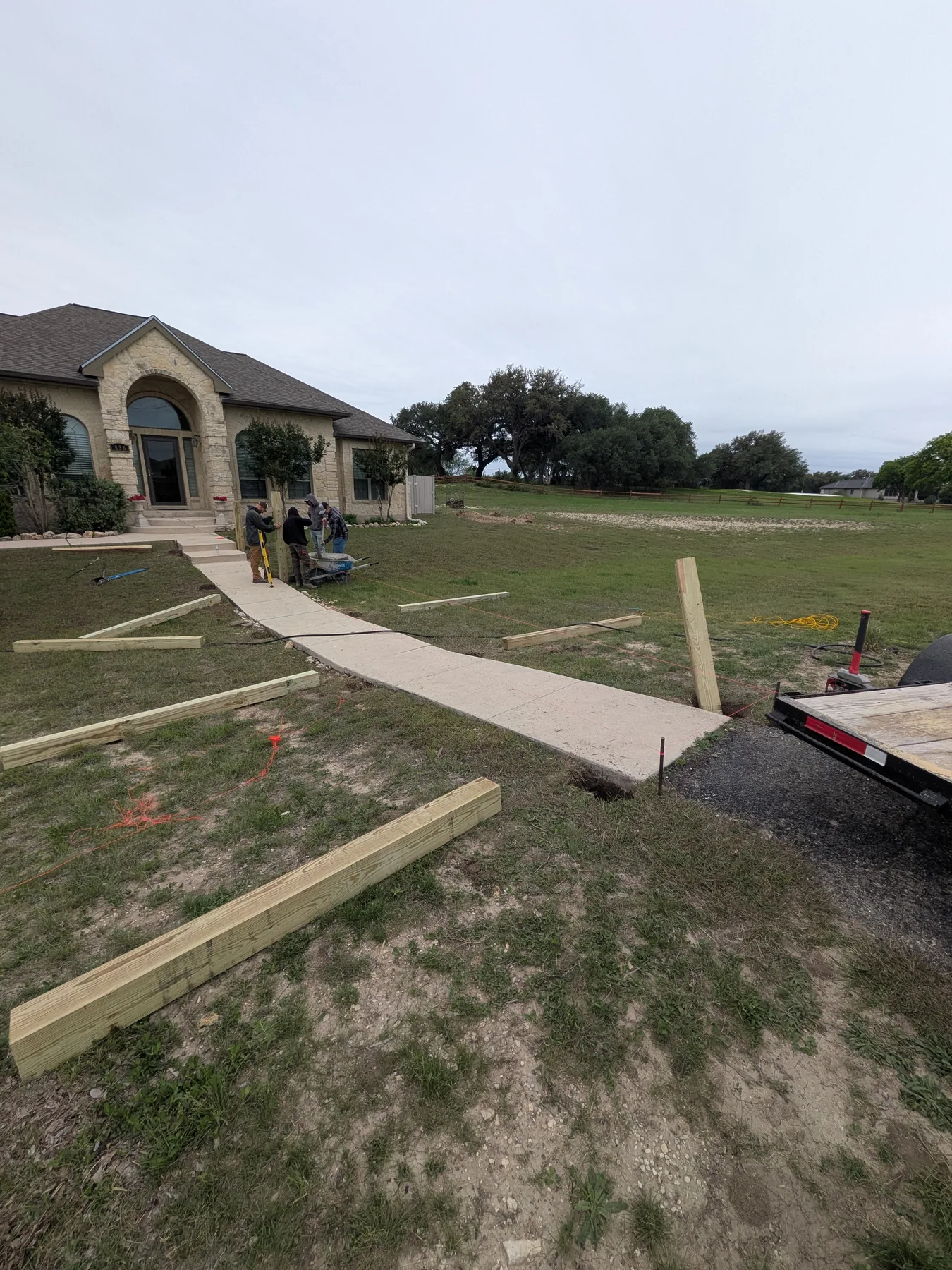
Framing
The boardwalk was framed with pressure-treated lumber, with joists set 12 inches on center to support the Trex decking properly.
Before the decking went down, we installed butyl joist tape over the top of the framing. That hidden detail helps protect the joists from water that works its way between deck boards and collects around fasteners.
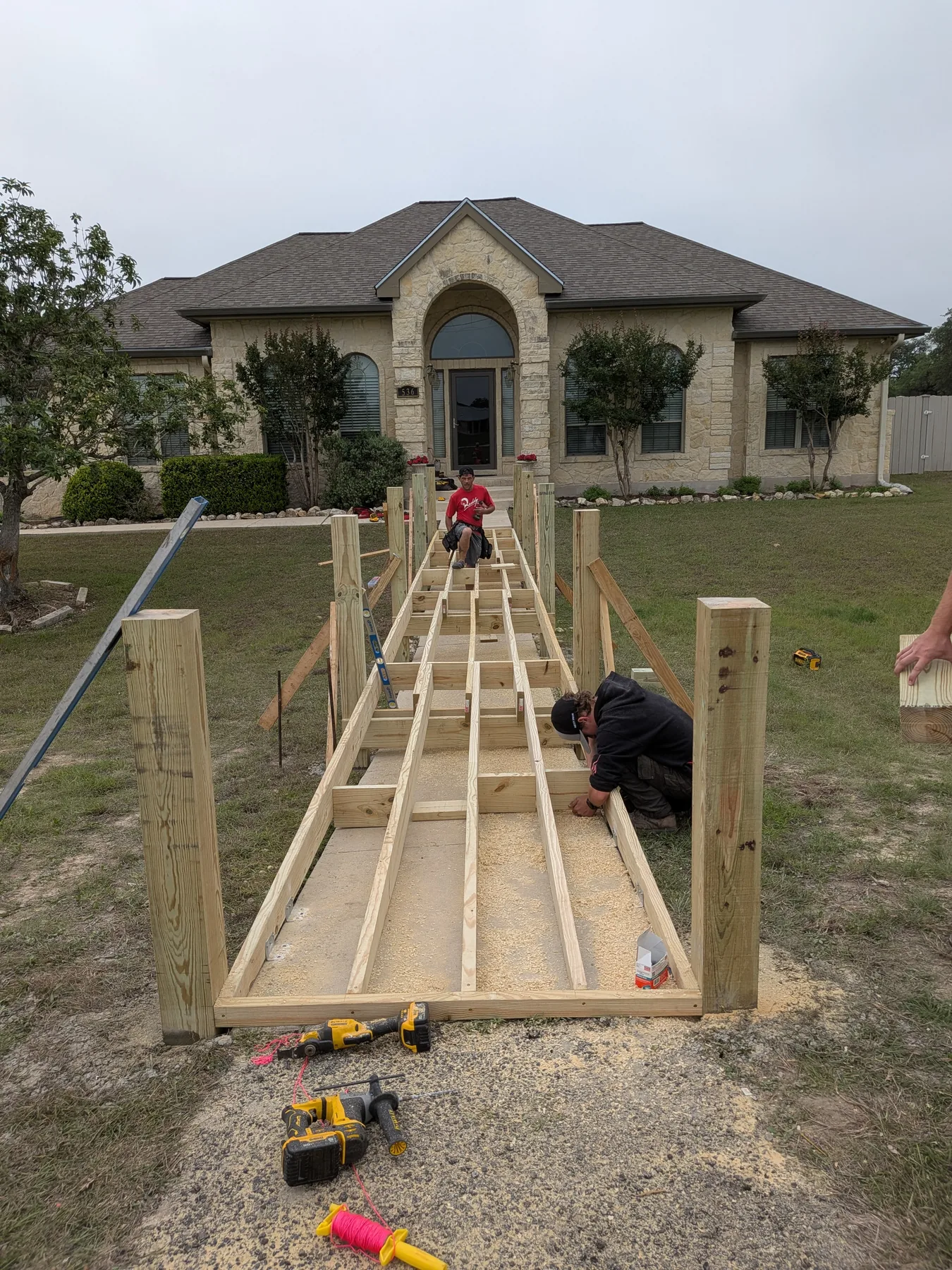
Finish materials
For the walking surface, we installed Trex decking in Honey Grove using hidden fasteners for a clean, screw-free finish. Around the edges, matching Trex fascia gave the boardwalk a more finished look and helped protect the framing.
To complete the design, the 6×6 posts were extended above the deck surface and used as the railing system. We drilled through the posts and installed 2-inch natural jute rope in a double run along each side.
Solar-powered lights were added to cap the posts, and provide nighttime lighting and ambiance.
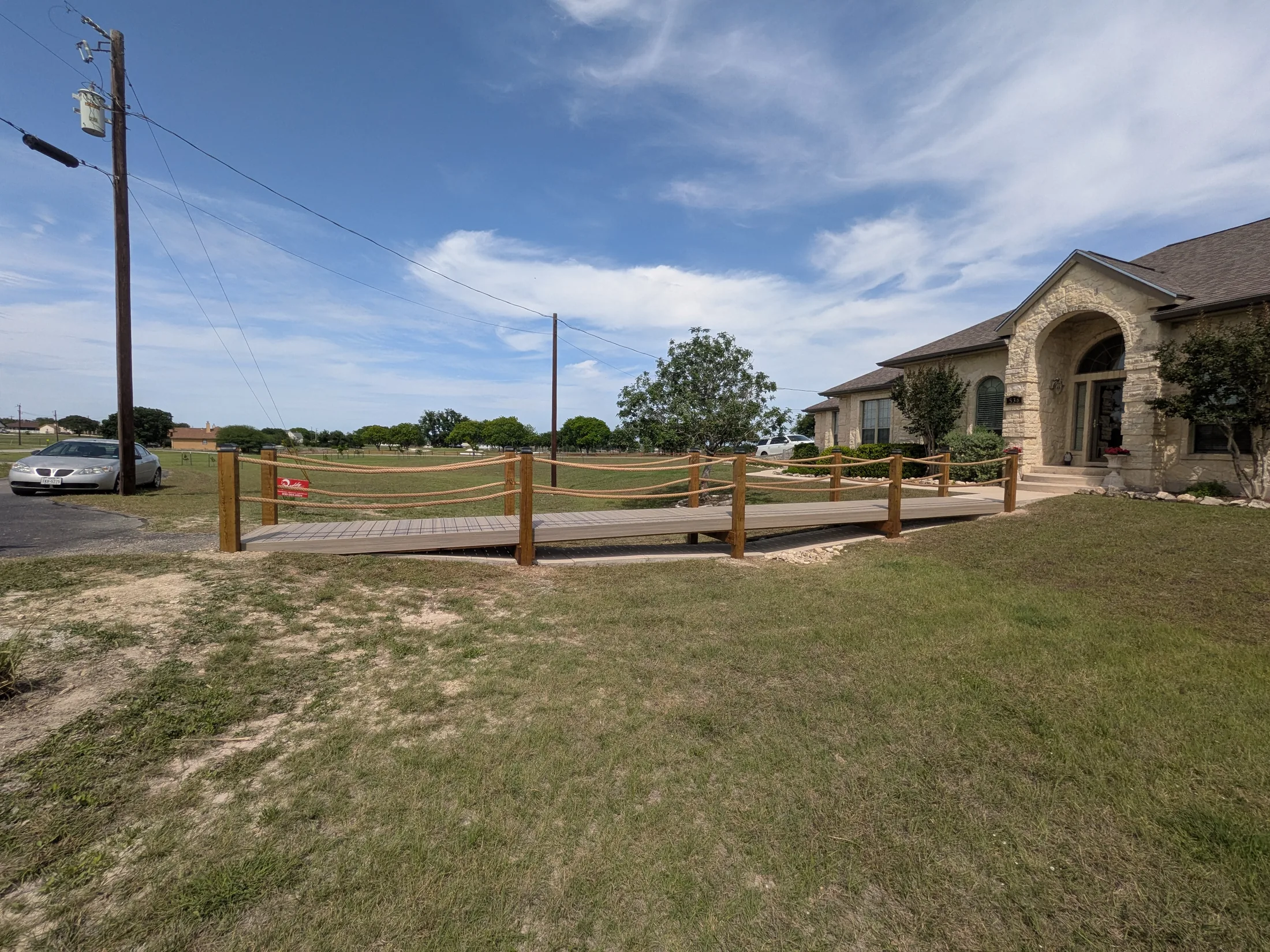
Timeline
This Flying L project was completed in April. The work took four working days total, all within the same week.
By the end, the homeowners had dry, consistent access from their parking area to the front entry, even when rainwater was moving through the low area.
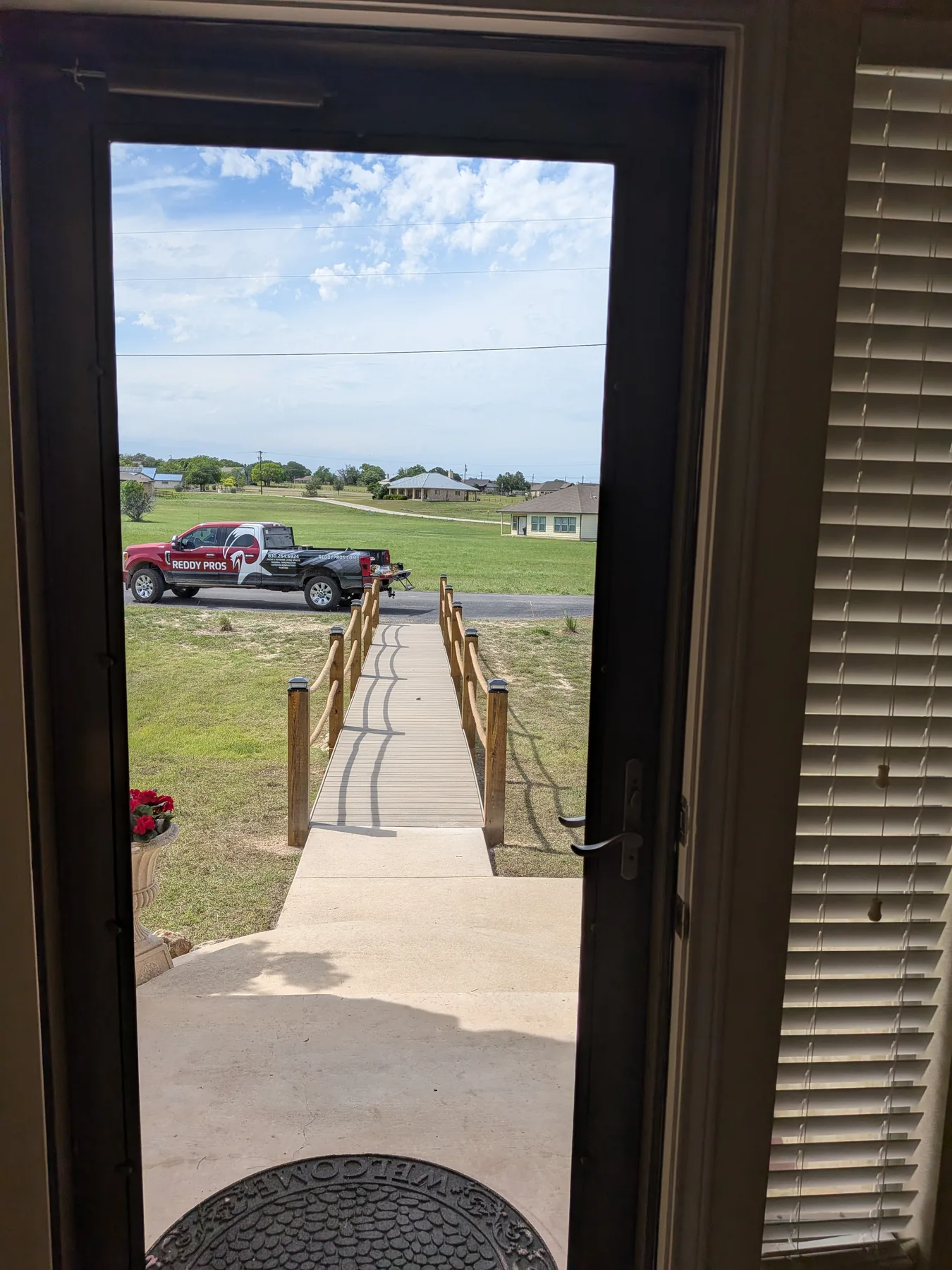
The result
The finished boardwalk now gives the homeowners dry, consistent access from their parking area to the front entry. More than that, it looks like it belongs with the home.
If you have a low area, drainage path, creek crossing, or muddy section that cuts off part of your property after a storm, the answer may not be more concrete or more gravel. Sometimes the better solution is to let the water do what it already wants to do and build a clean, durable path above it.
Project photos
Homeowner review
5-star Google review
Totally pleased with the bridge/dock that was constructed, professional work, timely and great work ethics!
Traci Bellis
Ready to solve an access problem?
If a drainage path, creek crossing, ravine, or muddy stretch makes access difficult after rain, send photos or request an estimate. We can look at how water moves through the area and help decide whether a raised boardwalk or bridge makes more sense than more concrete or gravel.